
Trial by Fire / Episode 2
In this episode, Bailey Lazzari traces her path from public defender to criminal defense attorney and firm owner in Wyoming. She opens up about launching her own practice early on, making the leap into private work, handling a demanding caseload, cultivating a team culture that lasts, and carving out room for the personal passions that keep her grounded.
Julia: What first drew you to law as a career?
Bailey: My dad was a divorce attorney in Chicago for 30 or 40 years. In the nineties, “Take Your Daughter to Work Day” was a big thing, so I remember going with him to the courthouse in downtown Chicago. There was the huge Picasso sculpture outside, 40 floors of courtrooms, and an entire floor for the clerks. I thought it was the coolest place ever. I looked up to my dad and wanted to do what he did. I loved the hustle and bustle. Everyone seemed confident, but it felt like they had something to be confident about. They cared about their clients and their cases, and they were working toward something they were proud of. Of course, when I reached my teens and twenties, I did not want to do anything my parents wanted me to do. I put law aside and collected degrees in psychology, social work, and teaching instead. Eventually, my parents told me, “You cannot get another scholarship. You have to decide what you want to do for a living.” So naturally, I got a scholarship to law school.
Julia: That may be proof you were meant to become a lawyer. Someone told you not to do something, and you did exactly that.
Bailey: Exactly. I just needed someone to tell me not to do it.
Julia: You opened your own firm relatively early in your career. What inspired you to take that leap?
Bailey: During law school, I worked for a large personal injury firm called the Spence Law Firm. It is known for cases like the Karen Silkwood trial and the McDonald’s hot coffee case, so I thought personal injury was what I would pursue. Then I realized I might not be the best employee. I value flexibility and work-life balance. Some days, I would much rather send an email at eleven o’clock at night than at nine in the morning. When I entered the legal profession, it was still before COVID, and traditional firms generally expected associates to work long, rigid hours. I knew I did not want that life. I wanted to be my own boss so I could decide what my schedule and my life would look like. I opened my firm directly out of law school in 2017. My primary motivation was to remain in control of my own time. Now that the firm has become busier, I do not always feel as though I have as much control as I did at the beginning. Sometimes I also wish I had spent time at another firm first so I could have received more mentorship. But there are trade-offs with every decision.
Julia: Have you found mentorship in other ways?
Bailey: At the beginning, it was mostly the school of hard knocks. I was too shy and not confident enough to ask for help. It can be scary to admit that you do not know something. Now, I have many mentors, and most of them are also my friends. I am much more comfortable with my own abilities, which makes it easier to say, “I do not understand this,” or, “I have never done this before.” I try to tell my staff and people who are just beginning their careers that nobody is going to judge them for not knowing what they are doing. We already know they are learning. Being willing to ask for help is actually a sign of confidence.
Julia: You grew up near Chicago but now practice in Wyoming. How did that happen?
Bailey: It was definitely a journey. I started college at the University of Illinois. Halfway through, I decided I wanted to be a free spirit living out of a van, so I dropped out and traveled around the country in my car, going to live music events. I also sold gems and minerals for people in Pakistan, France, Afghanistan, and Brazil while attending school online. Eventually, I ended up in Colorado, where I continued working on degrees in psychology and social work. That was when my parents told me I needed to either find a full-time job or stop earning undergraduate degrees. I began applying to law schools and looking for scholarships. The University of Wyoming offered me essentially a full scholarship, which is rare in law school. Many lawyers graduate with a significant amount of debt, so I thought, “I will give Wyoming a try.” I attended law school in Laramie and loved it. Later, I learned about legal work being done near the Wind River Indian Reservation, home to the Eastern Shoshone and Northern Arapaho tribes. I was fascinated by the idea of a sovereign nation existing within another country and by the legal issues that came with it. I decided to move to Lander for six months and have a little Wyoming adventure. I accepted a public defender contract, meaning the public defender’s office did not directly employ me, but it assigned cases to me. Then I fell in love with the area. At the time, it was possible to buy large pieces of land relatively affordably. While my friends in Chicago were shopping for condominiums, I was looking at acreage. I found my dream home about 15 years earlier than I ever expected to. Lander became home very quickly. I discovered that I loved the small-town community.
Julia: What is it like living there?
Bailey: It is gorgeous. We are at the base of the Wind River Mountains. I live on 40 acres beside a national forest. There are elk, wolves, and antelope in my yard, and I can see the Milky Way through my bedroom window. It does not get much prettier than that.
Julia: You mentioned the school of hard knocks. What were some of the biggest challenges early in your career?
Bailey: Anyone who has worked as a public defender knows that it is the ultimate school of hard knocks. Our court system would not function without public defenders, and I have no idea how so many of them continue carrying those workloads. My public defender contract was supposed to represent about 75 percent of my working time, but there were periods when I had approximately 120 criminal cases. Those ranged from misdemeanors to extremely serious felonies. The first shock was realizing how much work was simply expected of me. My first trial involved 13 counts of aggravated assault and battery against police officers. The officers had surrounded my client’s home, and the encounter ultimately became a shootout. That was the first trial I had ever handled. It was truly a situation where I was either going to love the work or hate it. Fortunately, I loved it. I excelled under the pressure and was not afraid of the courtroom. Looking back, I have no idea how I did not collapse into a pile of mush or run away screaming.
Julia: That really is the definition of trial by fire. How is your private practice different?
Bailey: I no longer handle public defender cases. I still represent people in very serious criminal matters, but private practice feels much more manageable. I feel as though I have a better grasp on my caseload and can handle cases properly, rather than constantly thinking, “I am doing the best I can, and I am just trying to survive.”
Julia: What have you learned about the business side of operating a law firm?
Bailey: Law school does not teach you anything about running a business. We would have benefited from learning even a little about marketing, search engine optimization, finances, and managing people. Managing employees was the biggest challenge for me because I had never held a management position before. At first, I think I was too relaxed. I wanted to be the cool boss. Then I realized that people still had to come to work and meet expectations. I struggled with communicating my needs and expectations clearly. I assumed that if employees liked their jobs, they would naturally rise to the occasion and do exactly what I wanted. That is not how it works. At the same time, having a team has become my favorite part of owning the business. I can teach people the things I wish someone had taught me. We have built a culture where everyone genuinely cares about the work. We can laugh together about the craziness of the cases, the clients, and sometimes the prosecutors’ responses. I am happy to be part of that culture, but I am also proud that I get to steer the ship. It is an enormous responsibility, but it is also a very rewarding responsibility when you are ready for it.
Julia: How would you describe your preferred leadership style?
Bailey: I was inspired by Phil Knight’s book, Shoe Dog. The idea that stayed with me was that you should not always tell someone exactly how to complete a task. Tell them what the final product needs to be, and let them surprise you with how well they accomplish it in their own way. That is how I want to lead: “Here is the goal. Reach it in the way that works best for you.” But I have also learned that some people need more guidance and a few additional steps along the way. We cannot all operate like Nike.
Julia: Are there particular cases that have felt especially meaningful to you?
Bailey: I am a criminal defense attorney, and many people assume that means I simply represent “bad criminals.” That is not the reality. A category of cases that increasingly finds its way to me involves women who have experienced domestic violence and are later charged with domestic violence themselves, or with another crime connected to their abuser’s actions. Sometimes a woman calls the police for help. When officers arrive, her partner is such a skilled manipulator that she is the one who ends up being arrested. Because mine is one of the few female-owned criminal defense firms in Wyoming, I think these women are more likely to find me. One case I handled involved a woman who was charged as an accessory after the fact to first-degree murder. She was in a severely abusive relationship. One day, her husband told her and their children to get into the car because they were going to see someone who owed him money. When they arrived, her husband confronted the man and shot him multiple times in broad daylight. My client did not see everything that happened, but she heard the gunshots. Her husband ordered her back into the car and told her to throw the gun out of the window. She was terrified, her children were in the back seat, and she had been conditioned to obey him. After returning home, she secretly passed the police a note explaining where she had thrown the gun. When officers separated her from her husband, she told them everything. Instead of being thanked for cooperating and helping locate the weapon, she was eventually charged. We took the case to trial and argued that her actions were not intentional assistance. She was a survivor responding to the commands of an abusive husband. We won. Cases like that remind people that situations are rarely black and white. Every person has a story, even when they have done something wrong. They are not always the stereotypical criminal defendant people imagine.
Julia: It also shows why having women in criminal defense is so important.
Bailey: I am grateful that these women find me, and I hope more of them do. A good attorney can change everything, not only the outcome of a case, but also how a person experiences and understands the court system. Some clients come into my office and tell me they have not heard from their previous attorney in months. I try to be a consistent source of support throughout the entire process, not just during the moments when they urgently need legal representation. There is a reason attorneys are called counselors. Honestly, some days I probably use my social work degree more than my law degree.
Julia: What does life look like outside the firm?
Bailey: I always joke that I would be the best stay-at-home girlfriend in the world. It is not because I do not like to work. I love cooking, gardening, decorating, and making my home comfortable for my family. I read cookbooks constantly. I used to enjoy climbing mountains, snowboarding, and doing frightening outdoor sports. Now, I would rather take a long hike through the wildflowers, come home early, and cook a good roast. My dream aesthetic is something like a coastal grandmother or Martha Stewart, but in the mountains.
Julia: What do you hope the firm looks like ten years from now?
Bailey: I hope it can function on a daily basis without me personally turning every wheel. A true sign of a successful business is not only having support staff. It is having a team that can operate the business without the owner being involved in every decision. I always want to handle cases. I love the legal work, and I do not see myself completely stepping away from it. But I would like the firm to understand its systems and culture so well that it can run without me constantly reminding everyone what to do. It sounds like a simple goal, but it is not simple to accomplish. It requires time, strong systems, and many good people.
Julia: What final advice would you give women who are thinking about starting their own firms?
Bailey: It may sound cheesy, but you have to be confident in yourself. Every time you second-guess yourself or assume someone else could do it better, remember that those people are probably thinking the same thing. When you lead with confidence, you can convince other people, and sometimes yourself, that you know what you are doing and that you are capable. Even when I am not completely certain I can do something, I still believe I can do it better than anyone else who is willing to try. None of us is perfect. You simply have to try, and when you try, you have to do it confidently.
Lazzari Legal
For Bailey Lazzari, criminal defense was never just about winning cases. It was about standing beside people during the worst moments of their lives. That conviction is what led her to open Lazzari Legal, LLC in 2017, growing it into a firm known across Wyoming for defending clients in state, federal, and tribal courts against charges ranging from traffic offenses to serious felonies. Her work hasn’t gone unnoticed either, with honors like the Wyoming Trial Lawyers Association Rising Star recognition, a place on the National Trial Lawyers’ Top 40 Under 40, and repeated Avvo Clients’ Choice Awards. But ask her clients what sets her apart, and they’ll point to something simpler: she treats their fight as her own, blending sharp legal skill with the kind of care that makes people feel genuinely defended.
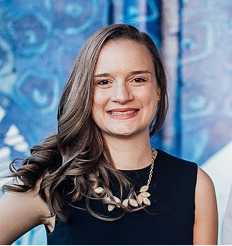
Host · CEO of Lexigate & Repspert
Julia Hensel is the host of Trial by Fire and the CEO of both Lexigate and Repspert, two companies built around helping law firms grow and thrive. She spends her days thinking about what makes a practice succeed, from the business side to the people behind it, and that work has given her a deep admiration for the women who take ownership. That admiration is what sparked this podcast. Trial by Fire is her space to sit down with women lawyers, hear their stories, and celebrate the grit, wisdom, and quiet courage it takes to build something on your own terms.
 Episode 9
Brooke Birkey
 Episode 8
Veronica Fink
Trial by Fire features women who built their own firms. If that's you, we'd love to talk.
Be a guest