

Trial by Fire / Episode 14
In this episode, Maria Levanoff shares her journey into law and the lessons she has learned about building a family law practice centered on affordability, compassion, and meaningful client relationships. Maria discusses how her background in environmental policy shaped her path, why the COVID-19 pandemic prompted her to take the bar exam and begin practicing, and how she developed an approach to family law that prioritizes clear communication and human connection. She explains the philosophy behind Davis and Associates, including how flat fee arrangements can make legal services more predictable and accessible for clients facing difficult family situations. Maria also reflects on the challenges of managing the business side of a law practice, from finances and marketing to attracting new clients through online reviews and community engagement. Throughout the conversation, she emphasizes the importance of setting boundaries, protecting personal time, and building a sustainable legal career that leaves room for life outside of work.
Julia: What first made you think you wanted to become a lawyer?
Maria: I was that kid in high school where everyone said, "You're really good at arguing. You should be a lawyer." And I thought, sure, why not?
I'm a Cleveland native, and I went to Cleveland State University for eight years. During my sophomore year of undergraduate school, I was in the honors program, and they told me that if I wanted to apply to law school through the program, I needed to do it then. So I ended up applying to law school very early.
I went to law school at Cleveland State and earned a master's degree there as well. But by the end of those eight years, I was completely done with school and the law. My background was actually in environmental policy, and I went to work as a city planner for a few months. I thought I might leave law behind entirely and pursue that career instead.
Then COVID happened, and suddenly I had all this time on my hands. I decided I might as well study for the bar exam. I took the October 2020 bar exam at my dining room table, with the entire exam monitored by video. It was incredibly nerve-wracking, but I passed on my first try.
At that point, I figured I was going to give this lawyering thing a shot. I was sworn in virtually from my living room, and I came out of that experience with very few professional connections and almost no idea what I was going to do next. I even considered starting a solo practice.
Julia: When you were in law school, did you already have a particular practice area in mind? How did you eventually find your way into family law?
Maria: I originally wanted to practice environmental law. I have a background in environmental science and a master's degree focused on environmental planning, so that was always my goal.
Unfortunately, environmental law can be difficult to break into in Cleveland. There are some excellent firms doing that work, but I didn't have the connections or the right experiences during school to get my foot in the door. When COVID happened, it became even more difficult because so many attorneys were losing their jobs.
At the same time, I've always had a soft spot for helping families and children. My mom is a social worker who works in children's services, and I have an uncle who works in the same field. That connection to helping families through difficult situations has always been important to me.
So even though family law wasn't my original plan, it turned out to be an area where I could do meaningful work and help people during some of the hardest moments of their lives.
I joke that sometimes clients are getting a discount therapist when they hire a family law attorney, just not at therapist rates.
Julia: How did you eventually get connected with Davis and Associates?
Maria: I actually started my legal career working in e-discovery. I wanted a steady paycheck, so I joined Brightline Legal, a firm based in Cincinnati, and worked there for several years while the legal job market recovered.
Eventually, I moved to another firm based in Columbus. Then someone from Davis and Associates reached out to me on LinkedIn about an opportunity in Cleveland.
I decided to apply, although I accidentally sent them an older version of my resume. I was convinced I would never hear back.
Two days later, Brendan Davis called me and said he was excited to discuss the opportunity. We talked, and two days after that, I had an interview. I received an offer later that same day.
As someone who was born and raised in Cleveland and has lived here my entire life, I really appreciate being able to help people in my own community. I work with clients in Cuyahoga County and surrounding areas, including Summit, Lorain, Medina, and Geauga counties.
Julia: Client communication seems to be a major part of how you approach your work. What does good communication look like to you?
Maria: I genuinely believe there isn't enough communication happening in the legal profession, whether that's between attorneys or between attorneys and their clients.
There's this stereotype that someone hires a lawyer and doesn't hear from them again until their court date. I hear that concern from clients, and I understand why they're worried.
For me, communication starts right away. As soon as I receive a new client's information from our intake staff, I try to reach out as quickly as possible and schedule time within the next week to discuss their case in detail.
Clients can call me. I might not always pick up immediately, but I will get back to them. They can text me, and if it's the middle of the night, I'll respond in the morning. They can email me, too.
But communication isn't just about being available. It's also about being compassionate.
Sometimes, as lawyers, we get so wrapped up in practicing law that we forget we're human beings, and our clients are human beings, too.
These people are dealing with divorce, custody disputes, or situations involving children's services. They're going through some of the hardest experiences a person can face.
We have to remember to put the human being first.
Julia: What drew you to the way Davis and Associates operates, particularly when it comes to serving clients?
Maria: One of the things I appreciate is that Davis and Associates has the resources and support of a large family law firm, but because we have regional offices, we can still maintain that smaller-firm feeling.
We've also moved to a flat fee structure for our legal services. That includes initial fees, recurring monthly fees, and trial fees.
The goal is to make legal expenses more predictable.
With traditional hourly billing, a particularly busy month can result in a huge bill because there were numerous emails, phone calls, or court appearances. Under our model, clients have a much clearer understanding of what they'll be paying.
Many of our clients pay around $600 per month, although the specific arrangement depends on their case.
We want to make sure that attorneys, paralegals, and staff are compensated for their work while keeping family law services affordable for the people who need them.
That predictability can make a meaningful difference for families who are already dealing with stressful financial and personal circumstances.
Julia: What have been some of the biggest lessons you've learned about the business side of practicing law?
Maria: If you think you might eventually open a solo practice, it's never too early to start thinking about the business details.
It's fun to design a website, create an email address, and order business cards. But there's a lot more that goes into running a law practice.
When I first started, I tried to open a client trust account, and the bank told me they needed something on my letterhead. I remember thinking, I don't even have letterhead yet.
That was something I hadn't considered.
You also need to understand the rules governing client funds and trust accounts in your state. You have to make sure you're properly handling money, keeping accurate records, and not mixing client funds with your own.
Those aren't small details. Mistakes can create serious problems with the bar.
Malpractice insurance is another important consideration. You need to research reputable providers and make sure you have appropriate coverage.
Payment processing is important, too. When I started, I looked into LawPay so clients could pay electronically rather than handing me physical checks.
Early on, I was doing quite a bit of low-cost legal work, including $50 wills, because I wanted to make services accessible.
Then there are the organizational systems. You need a reliable calendar, a way to track deadlines, and a system for recording client time.
Even with flat fee billing, we still need accurate records so we can provide an accounting when clients request one.
There are so many practical things that law school doesn't necessarily teach you. I wish there had been a course specifically about running a solo or small law practice.
Julia: When it comes to growing a law practice, what have you found to be the most important sources of new clients?
Maria: Right now, we rely heavily on Google reviews.
It's amazing to me how important Google reviews have become. A series of negative reviews can have a significant impact on a business, and people really do pay attention to what others are saying online.
I sometimes wish traditional word of mouth were still more common. There was something about calling a friend and asking who they used for their divorce that felt more personal.
Now, people often look at Google, Facebook, Instagram, and other online platforms to make those decisions.
At Davis and Associates, we're also thinking carefully about how to grow sustainably.
In our Cleveland office, we have two attorneys, and we have another team member based in Toledo who was awaiting bar results at the time of our conversation.
I'd love to see us grow enough to have a dedicated attorney serving Akron and Summit County.
But growth requires balancing the number of clients we have with the number of attorneys available to serve them.
We want to bring in enough business to expand the team, but we also need to make sure we're supporting our existing clients and managing the workload responsibly.
That's one of the biggest challenges when you're trying to grow a practice.
Julia: Do you believe it's possible to have work-life balance as an attorney? How do you approach it personally?
Maria: Absolutely. Work-life balance is huge to me, and it was actually one of the reasons I was drawn to Davis and Associates.
The firm understands what a reasonable attorney workload looks like. There's no general expectation that I'm working every night and every weekend.
Of course, if I have a trial in three days, I'm going to do whatever I need to do to be prepared. But that shouldn't be the expectation every single week.
My weekends are very important to me.
I don't necessarily turn my phone off completely, but I try to limit when I'm checking work messages. I might set aside a little time after dinner to make sure there's nothing urgent that needs my attention.
If something is truly an emergency, I always remind people that they should contact the appropriate emergency services rather than relying on their lawyer.
Dinner is also an important time for me. It's an opportunity for my husband and me to reconnect at the end of the day.
I'm also a huge baseball fan, so when baseball is on, I try to make time for that.
I think the key is recognizing which parts of your personal life matter most and making sure you protect time for them.
Julia: What do you enjoy doing outside of work? What does a great weekend look like for you?
Maria: I'm going to reveal just how much of a nerd I am, but I love tabletop gaming, especially Warhammer Fantasy.
Saturday evenings are usually reserved for gaming with a group of online friends. We're spread across the United States, so it's a great way to stay connected.
We typically start around seven in the evening and sometimes play until midnight. But honestly, we often spend the first hour just talking and catching up on everything that's happened during the week.
That's part of what makes it so special.
I also try to make time for my friends whenever possible.
On Sundays, my husband is usually working because he's a lead pharmacy technician, so I spend that time with my parents.
Sunday dinner with my family is a big tradition for us.
Those routines, whether it's spending time with friends, gaming, watching baseball, or having dinner with family, are things I make a priority.
Being an attorney is an important part of my life, but it's not the only part. I want to make sure there's room for the people and activities I love.
Julia: Looking back on your journey, what stands out most about the kind of legal career you're building?
Maria: For me, it comes back to helping people and making sure they feel supported.
Family law is incredibly personal. We're working with people who are dealing with major changes in their relationships, their families, and their futures.
I want clients to know that they can communicate with me, that their concerns matter, and that they're working with someone who sees them as a person rather than just another case.
I also think it's important to keep learning about the business side of law and find ways to make legal services more affordable.
And just as importantly, I want to have a career that allows me to do meaningful work without giving up everything else that matters in my life.
Julia: Maria, thank you so much for joining me and sharing your story. It's been wonderful hearing about your journey, your approach to family law, and the importance you place on connecting with clients as people. I really appreciate you taking the time to be here.
Maria: Thanks for having me.
Davis and Associates
Maria Levanoff is a Cleveland-based family law attorney with Davis and Associates, where her approach to legal representation emphasizes affordability, communication, and compassion. Before entering legal practice, Maria developed a background in environmental policy, taking a less conventional path into the legal profession. The COVID-19 pandemic became a turning point in her career, motivating her to take the bar exam and pursue the practice of law. Her work in family law focuses on helping clients through emotionally challenging situations while making legal services more accessible and predictable through flat-fee arrangements.
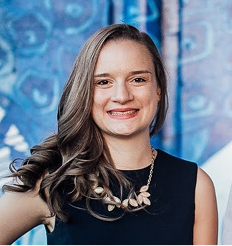
Host · CEO of Lexigate & Repspert
Julia Hensel is the host of Trial by Fire and the CEO of both Lexigate and Repspert, two companies built around helping law firms grow and thrive. She spends her days thinking about what makes a practice succeed, from the business side to the people behind it, and that work has given her a deep admiration for the women who take ownership. That admiration is what sparked this podcast. Trial by Fire is her space to sit down with women lawyers, hear their stories, and celebrate the grit, wisdom, and quiet courage it takes to build something on your own terms.
 Episode 13
Shira Katz Scanlon
 Episode 12
Megan Kiefer
Trial by Fire features women who built their own firms. If that's you, we'd love to talk.
Be a guest