

Trial by Fire / Episode 13
In this episode, Shira Katz Scanlon shares her journey from law student to founding shareholder of a successful women-owned law firm. Shira explains how an unexpected shift away from psychology led her to law, why she and her partner decided to build a firm of their own, and how a practice that began with two lawyers and one assistant grew into a larger team over more than a decade. She also shares why culture and intentionality have been central to the firm from the beginning, what she learned about running a business without formal business training, and how the partners have developed roles that reflect their individual strengths. Shira discusses her work as president of Women-Owned Law, the importance of creating stronger support systems for women in the legal profession, and her belief that the next generation should have an easier path to leadership and ownership.
Julia: What first made you think you wanted to become a lawyer?
Shira: I actually thought I was going to be a psychologist. In college, I interned with a forensic psychologist, and during that experience I realized I did not want to pursue clinical psychology. He did some forensic work involving criminal cases, and that was really the first time law school occurred to me.
I knew I did not want to do criminal defense, but something about the legal field clicked. I took the LSAT, went to law school, and kept finding my way into things somewhat accidentally. I never set out knowing I would become a family lawyer either. That part of my career happened in much the same way.
Julia: You also did not start law school thinking you would eventually own a firm. How did that happen?
Shira: I started the firm with one of my two partners now. We had both clerked and then ended up working at the same boutique family law firm. I was only about two and a half years into practice when we looked at each other and realized that we had each done one of everything.
We also started realizing that law firms did not necessarily have to look the way they had always looked. There was a certain model of how firms operated, and it was not completely aligned with how we wanted to work or how we imagined a future team working. So we decided to build something different.
For years, it was just the two of us and one assistant. Now, almost 14 years later, we have eight lawyers and a team that has continued to grow in just about every way.
Julia: What did you want to do differently from the beginning?
Shira: It always came down to culture. My partner is also my best friend, so we have always had a very close working relationship. When we started the firm, she had a small child, and I had just gotten married, so we were already thinking about what we wanted our lives to look like outside of work.
We wanted to create a workplace where people could be lawyers while also being wives, mothers, daughters, friends, and members of their communities. We knew there would be school events in the middle of the afternoon and responsibilities that did not fit neatly into a traditional workday, and we wanted the flexibility to show up for those things.
That did not mean working less. In many ways, we probably worked more. The difference was having more control over when and how we did the work. I joke that I now have a reputation as the laptop mom at baseball, but sometimes flexibility means leaving work early for your child's game and bringing the laptop with you. That still feels very different from believing you cannot show up at all.
Julia: What were some of the biggest challenges in those early years?
Shira: Everything was a challenge. We were fortunate to have people willing to give us advice, but most of the attorneys who had built firms before us were men from a different generation. We appreciated their experience, but there were not many people who felt like us or were trying to build the kind of firm we wanted to create.
I also had no idea how to run a business. I had to learn QuickBooks, and I had never taken an accounting class. I did not know how to run payroll, manage a business, or be an employer. We handled it by taking one problem at a time. If we needed to figure out payroll, we figured out payroll. Then we moved to the next thing.
We were also lucky that both of us came from entrepreneurial families. My parents ran a home health care agency, and my partner's family ran a flower shop. They were not lawyers and did not own law firms, but they understood what it meant to run a business, so we had people we could call for advice. We had pieces of the puzzle and gradually filled in the rest.
Julia: Did the firm's growth happen gradually, or was there a moment when things really accelerated?
Shira: It was very organic. In late 2019, two different attorneys approached us independently and said they wanted to join the firm. We took that as an enormous compliment because it meant people were looking at what we had built and saying, "I want to be part of that."
One was a very experienced attorney who is now of counsel, and shortly after that our third partner joined us. Then COVID happened, and the firm continued growing. We hired more staff, and our first associate came through Drexel's co-op program. I was in the inaugural class at Drexel Law, so I have always had a soft spot for the school and that program.
At one point, I was also handling a lot of the firm's operational responsibilities myself, and eventually it became too much. Hiring a director of operations was a major step for us because it was the first position where we could not simply calculate how many billable hours would cover the person's salary. It was scary to make that investment, but the amount of time she gave back to me was invaluable. That time could go toward client work, business development, or other things that helped the firm grow.
Julia: How do you divide responsibilities among the partners now?
Shira: It is still evolving. All three partners are available to mentor associates and support the team. We do not have a culture where someone is told they can only go to one particular partner. Collaboration is important to us, and we want people to feel like they have access to the resources and support they need.
At the same time, our roles have become more defined as the firm has grown. Suppose someone has a new marketing idea or something involving money; that often comes to me. Sarah is more focused on the legal work and cases, while Diana runs our Pennsylvania practice and handles a lot of team-related issues.
We got to that structure through trial and error. There were times when we tried dividing responsibilities a certain way and one of us quickly realized it was not a good fit. Then we adjusted. It has been a process of learning what each person enjoys, what each of us does well, and building around those strengths.
Julia: You are also president of Women-Owned Law. What is the organization about?
Shira: Women-Owned Law is really a community of women in the legal space who have an entrepreneurial mindset. It is not just a bar association, and it is not simply a networking group. Of course, there are women who own law firms, but there are also associates, business owners who serve the legal industry, and women who may or may not eventually own a firm themselves.
To me, there is something broader about ownership. It can mean taking ownership of your practice, your career, and your decisions even if your name is not on the door. The organization brings together women who think that way, and its focus ultimately comes back to connection and advancement.
Julia: What has been most meaningful to you about being part of that community?
Shira: The opportunity to connect with like-minded women has been the most meaningful part. There is something powerful about being in a room with people who understand the experiences you are having without needing a long explanation.
We have an annual symposium, and I always leave feeling energized. The first one took place just days before everything shut down in 2020, which almost feels fitting for the organization because the group is scrappy. People find a way, keep going, and support one another through it.
For me, that sense of connection has been incredibly valuable, both personally and professionally.
Julia: You have also spoken openly about the experiences women lawyers still face. What has that looked like for you?
Shira: I have been mistaken for a paralegal. I have been asked to get coffee or water in a conference room, and I have been expected to clean up. Those things have happened, and I hope they happen less often for the women coming behind us.
One of my favorite stories happened in court when my client leaned over and said, "My lawyer is prettier than her lawyer." I looked him straight in the eye and said, "Too bad we don't get extra points for that." I was actually very proud that I thought of the response in the moment instead of in the parking lot afterward.
There is humor in a story like that, but it also points to something real. Women in law still deal with assumptions and comments that would rarely be directed at men. Being able to talk about those experiences with other women who understand them makes a difference.
Julia: How important is supporting the next generation of women in law to you?
Shira: It is very important to me. By the time I went to law school, law school classes were already mostly women, but women were still far less represented in partnership, equity, and firm ownership. That gap is part of what makes organizations like Women-Owned Law so important.
There were women before me who helped create opportunities, but I also saw examples where women got through the door and then pulled the ladder up behind them. I do not want to do that. I do not just want to leave the ladder down. I want to build a staircase behind me.
If we can share our experiences, give people access to the support we did not always have, and make the path a little clearer for the next generation, I consider that a huge success.
Julia: How did you end up specializing in family law?
Shira: Much like becoming a lawyer, I fell into family law somewhat accidentally. An opportunity came up, and my first reaction was actually to laugh. Then the person I was speaking with pointed out that laughing was a strange response when a partner at a family law firm was offering me a job, so I quickly clarified that of course I would consider family law.
Once I started doing the work, I realized I was actually very well suited for it. My psychology background helps because family law requires empathy, but it also requires the ability to compartmentalize. It can be an emotionally difficult practice area, and you need both qualities.
I originally wanted to become a therapist because I wanted to help people. What I eventually realized is that I still spend much of my day listening to people's problems, but now I also get to help them make decisions that can change the situation. Those decisions affect their children, finances, families, and futures, so the work reaches into some of the biggest parts of a person's life.
You have to care deeply about this work to do it for a long time, and it turns out that I do.
Julia: What does your practice look like today?
Shira: I am more selective with my own cases now because there are only so many hours in a day. A lot of my work is divorce, and I am often working with higher-net-worth clients, although everything still falls within the broader family law space.
The goal is always to make the process as efficient and cost-effective as possible, although with a divorce there are at least two people affecting how expensive the process becomes. My client does not control everything, but we try to be thoughtful about what we can control.
Our firm represents both men and women, but a lot of my own clients now happen to be women. It turns out I really enjoy helping women through these major transitions and giving them the information they need to make decisions about what comes next.
Julia: You mentioned being the laptop mom at baseball. What does work-life balance mean to you?
Shira: I do not really believe in work-life balance as this idea that every day is perfectly divided between the two. That is not realistic. On any given day or week, work or life is probably going to need more attention.
My approach has always been to zoom out. Over time, I want there to be some kind of equity between the two, even if I am not winning at both on every single day. There is also an invisible cost to running a family and household, and someone has to carry that work. I think simply being honest about that reality is important.
For me, flexibility sometimes means stopping the workday at three o'clock to get to baseball and then bringing my laptop with me. I might be sitting at a baseball field doing some work because that is what allows me to be present for both parts of my life. It may not look like traditional balance, but it works for me.
Julia: You are also very direct about boundaries with clients. How do you approach that?
Shira: I really believe in normalizing the fact that I am a lawyer, but I am also a human being and a mom. When I am on vacation, my out-of-office message might essentially say, "Yes, technically I can check my email, but I am choosing not to."
I need to disconnect sometimes because taking a real break makes me a better person, a better parent, and a better lawyer. Some attorneys are surprised that I would tell clients so directly that I am not checking email, but I think the boundary is important. My kids need me, my husband needs me, and I need that time too.
I have actually had clients respond to those messages and tell me how much they appreciated them or that they wanted to use the same idea themselves. That is meaningful because those are the kinds of clients I want to work with, people who understand that being good at your job does not require pretending you do not have a life outside of it.
Julia: What advice would you give a woman who is thinking about opening her own firm?
Shira: I would say, forget about imposter syndrome and work on getting past it, because you can. I really believe that we start to believe the things we repeatedly say about ourselves, so if there is a voice in your head telling you that you cannot do something, you have to work on changing that narrative and replacing it with something more useful.
I would also tell women to lean on their networks and ask for help. There are no dumb questions, especially when you are building something for the first time. Whether it is work, family, or starting a business, nobody does it entirely alone. The people and resources around you matter, and success is much easier when you have a team helping lift you.
Martine, Katz Scanlon & Schimmel
Shira Katz Scanlon is a founding shareholder of Martine, Katz Scanlon & Schimmel, a women-owned law firm with offices in Cherry Hill, Philadelphia, and Princeton. After initially planning to pursue psychology, Shira found her way to law and later to family law, where her empathy and ability to help clients make difficult decisions proved to be a strong fit. Only a few years into practice, she and her partner launched their own firm with a clear goal of creating a culture built around flexibility, collaboration, and the ability to have a meaningful life outside of work. Over the past 14 years, Shira has helped grow the firm from two lawyers and one assistant into a larger team of attorneys and staff. She is also the president of Women-Owned Law, where she supports women across the legal industry who are interested in ownership, leadership, and entrepreneurship. Her approach to firm ownership is rooted in intentional culture, strong partnerships, authenticity, and creating a clearer path for the women coming up behind her.
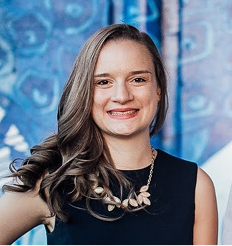
Host · CEO of Lexigate & Repspert
Julia Hensel is the host of Trial by Fire and the CEO of both Lexigate and Repspert, two companies built around helping law firms grow and thrive. She spends her days thinking about what makes a practice succeed, from the business side to the people behind it, and that work has given her a deep admiration for the women who take ownership. That admiration is what sparked this podcast. Trial by Fire is her space to sit down with women lawyers, hear their stories, and celebrate the grit, wisdom, and quiet courage it takes to build something on your own terms.
 Episode 12
Megan Kiefer
 Episode 11
Patricia Rodriguez
Trial by Fire features women who built their own firms. If that's you, we'd love to talk.
Be a guest