

Trial by Fire / Episode 12
In this episode, Megan Kiefer shares her journey from a philosophy major who once resisted becoming a lawyer to a third-generation trial attorney helping lead one of New Orleans’ growing plaintiff firms. Megan explains why she chose to begin her career outside her family’s firm, what she learned after eventually returning home, and how she helped transform Kiefer & Kiefer from a small, primarily defense-focused practice into a leading plaintiff personal injury firm. She also opens up about the business lessons that came with growth, including hiring, delegation, sustainable expansion, client service, referrals, SEO, and community engagement. Megan shares why doing right by clients remains at the center of the firm’s growth strategy, how challenging cases have shaped her approach to trial work, and what she has learned about balancing high performance with family, health, and a life outside the office.
Julia: Law was around you from a very early age. Did you always know you wanted to become a lawyer?
Megan: I grew up surrounded by lawyers, but most of them told me not to become one. I was more free-spirited when I was younger. I thought maybe I would travel the world, open a taco stand, or do something completely different.
I majored in philosophy and did not really have a next step. I had an opportunity to go to law school for almost nothing, so I thought, "I'll go to law school, but I'm not actually going to practice law."
Then they sucked me in.
Looking back, I think there was always a gravitational pull toward what I was probably meant to do, even though I resisted it for a long time.
Julia: With such deep legal roots in your family, what did the beginning of your career look like?
Megan: My family is from New Orleans, and our firm's roots here go back more than 60 years.
When I started interviewing for jobs, I was adamant that I was not going to work at my family's firm. I wanted to build something for myself. In New Orleans, almost every interview eventually became a conversation about my dad, my uncle, my grandfather, or another member of my family.
I did not want people to think that everything had been handed to me.
So I turned down the offers I had in New Orleans and started interviewing around the country. I eventually took a job in San Francisco, where nobody knew who I was or who my family was. That was important to me because I wanted to prove to myself that I could build my own reputation.
Julia: What brought you back to New Orleans and the family firm?
Megan: After a few years, I came back and joined the firm.
In hindsight, working somewhere else first was one of the best things I could have done. I had seen how a large, sophisticated firm operated, so I was able to bring a different perspective home.
When I returned, the firm was basically my dad and my uncle. They did not have electronic files, an electronic calendar, or much use for email. This was 2013, so it was pretty incredible.
I came from a firm where everything was highly structured and technology-focused. We were able to combine some of that structure with the toughness and practicality of a smaller practice.
It also taught me that everything does not have to be perfect in order to practice law well.
Julia: You eventually made some major changes to the firm. What did that look like?
Megan: After several years, I decided to reform the practice completely.
We moved from being primarily an insurance defense firm into the plaintiff practice we have today. We went from a very small operation to more than 30 people, and we are becoming recognized as one of the leading plaintiff personal injury firms in New Orleans.
In some ways, it feels full circle because I think plaintiff work was always part of our roots.
Julia: What have been some of the hardest lessons on the business side of growing the firm?
Megan: The biggest challenge was that I had no business training. I am a lawyer. That is what I was trained to do.
A lot of our growth has been instinctual, and it has been slow on purpose. I never wanted to hire a bunch of people because we suddenly had more cases and then had to let people go if things slowed down.
For a long time, I also did not believe the growth was real. Every time we got a good case, I thought it was an anomaly. Every time we got a great result, I thought it would never happen again.
Then there was hiring. I did not know how to interview people, what questions to ask, or how to delegate. I thought I needed to be involved in everything.
One lesson I learned is that you cannot always look at a hire based only on what the market says that position should cost. You have to look at the value that person can bring to the entire business.
There were probably people I missed out on because I was too focused on a salary range when paying a little more could have saved me enormous amounts of time and stress.
Julia: Has your approach to hiring changed as the firm has grown?
Megan: Definitely.
One of my biggest mistakes was thinking that I needed to hire everyone myself. I spent so much time interviewing people, and eventually I realized I may not even be particularly good at it.
I promoted one of my paralegals who is much better at those things, and now the firm is making better hires than I ever did.
There is something really freeing about realizing that you do not need to micromanage everything. You find out what people are good at, let them do it, and step back.
I also care a lot about longevity. I want people to stay here. I want to know the people who work with us, know about their families, and watch their kids grow up.
That means if something clearly is not a fit early on, it is often better for everyone to recognize that and move on rather than force it.
Julia: The firm has grown consistently. What has driven that growth?
Megan: I love that our growth has been multifaceted. There was not one lever that we pulled.
At the center of everything is doing right by people.
Plaintiff work is almost like a pyramid. You do right by one person, and they refer someone else. You do right by those two people, and they refer more people.
So regardless of how someone comes into our office, I want them to have an experience that makes them want to talk about us.
We also stay in touch with former clients, hold client events, send newsletters, and stay connected to the people we have helped.
Attorney referrals are another major part of our business. Other firms often send us difficult cases that do not fit neatly into a box.
We also do a lot of organic SEO and content marketing. I really like the idea of someone researching a legal issue, finding something we created that is genuinely helpful, and then deciding to call us because we already gave them useful information.
Julia: Community involvement has also become a big part of the firm. Tell us about Kiefer & Kiefer Gives.
Megan: We wanted to formalize our giving, so we created Kiefer & Kiefer Gives.
Every month, we donate $5,000 to a nonprofit. The organizations are nominated by our staff and community, and then people vote on where the donation should go.
One of the things I love most about it is that I am discovering incredible local organizations I did not even know existed.
These are groups doing meaningful grassroots work in our city, and getting to meet them helps me understand our community and our clients better.
I remember having a terrible day once and then going to deliver one of those checks. I walked out feeling completely transformed.
For a nonprofit operating on a very small budget, $5,000 can make a huge difference. You see what that money actually allows them to do, and it puts everything into perspective.
Julia: You have recovered more than $100 million for clients. What makes a case meaningful to you?
Megan: In some way, every case is transformative for someone.
We recently had a client who received a significant recovery after a trial. He used that money to buy a home, and his family moved in with him.
I realized that he was probably the fourth client we had represented after a jury trial who was able to buy a home afterward.
It is not about someone getting money and suddenly winning the lottery. In this client's case, he could no longer fully care for himself. Having that home meant his family could be there to support him physically and emotionally.
That is what stands out to me. A case can create this whole ripple effect for a person and their family.
Julia: Your firm is also known for taking difficult cases that other firms may not want.
Megan: Most of our cases are complicated.
We get referred a lot of cases that do not fit neatly into the traditional personal injury model. They take time, they take work, and sometimes there are legal issues that make them difficult.
I joke that I would love to have an easy trial one day.
But those are not usually the cases we get.
We have handled everything from construction defect cases to exposure cases, assaults, and unusual injury cases. They are all different.
That is where I think we shine. We are willing to put in the work and take a dogged approach to justice.
Sometimes a client's biggest reaction is simply, "Thank you for taking my case. You have no idea how many lawyers turned me down."
Even before you get the result, there is something meaningful about giving someone the chance to have their story heard.
Julia: You also give clients your personal cell phone number. How do you think about work-life balance and boundaries?
Megan: It is hard because litigation is not a neat nine-to-five profession.
There are times when I have multiple jury trials coming up, and I am working on a Saturday. That is difficult because I also have a young son and want to spend as much time with him as possible.
The concept of boundaries makes sense to me. The execution is harder.
If you want to perform at a high level and keep getting better, sometimes the work requires your attention outside traditional hours.
What I have tried to do is restructure my life so I can still prioritize my health and my family.
I wake up earlier now. I work out, spend time with my son, take him to school with my wife, come into the office, get as much done as possible, and then try to be home for dinner.
It is not perfect, but it matters to me.
I also do not think a lawyer who does nothing except work is necessarily better. If you do not have interests, relationships, hobbies, or a life outside the office, how are you going to relate to people authentically?
Julia: How do you protect that family time when work gets especially demanding?
Megan: My dad taught me that if you know a really intense stretch of work is coming, block out time for something meaningful before or after it.
If I know a big trial is going to take me away from my son, sometimes we go to Disney World for a couple of days. We get on a plane, have fun, and make that time count.
When I come home, I also try to make sure I do not immediately move on to the next thing. We go to the zoo, spend time together, whatever it is.
The same thing applies to clients. I want to be available, which is why I give out my cell phone number, but it is still a two-way street.
I need to take care of myself so I can perform for them.
My team is also very protective of that. If I take time off and say I need a mental break, they will tell me not to check my email.
I am a big believer in taking vacations, taking breaks, exercising, and protecting your mental and physical health.
Julia: If we had this conversation again ten years from now, what would you hope had changed, and what would you hope stayed the same?
Megan: The biggest thing I want to stay the same is the client service.
If clients do not feel the same way about us ten years from now as they did on day one, then we did not grow the right way.
I want us to continue performing at a high level, getting strong trial results, and creating value for clients.
But I also want other lawyers here to be doing that work.
If ten years from now I am the second chair, celebrating everybody else's wins, and I am more of the coach than the quarterback, I would be thrilled.
I want us to mentor and develop incredible trial lawyers who can carry that work forward.
And I hope we keep running into people we have helped, charities we have supported, and families whose lives were made better because of something we did.
When I think about all the sacrifices, the long days, and the Saturdays at the office, I want those things to keep creating ripple effects far beyond any single case.
Kiefer & Kiefer
Megan Kiefer is a partner at Kiefer & Kiefer in New Orleans and a third-generation trial lawyer whose firm has recovered more than $100 million for clients. Although law surrounded her from an early age, Megan initially resisted following the family path, majoring in philosophy before attending law school and beginning her legal career in San Francisco, where she could establish herself independently. After several years, Megan returned to New Orleans and joined her family’s firm, bringing with her experience from a larger, technology-forward legal environment. She later helped reshape the practice from a small firm focused largely on insurance defense into a growing plaintiff personal injury firm with more than 30 team members.
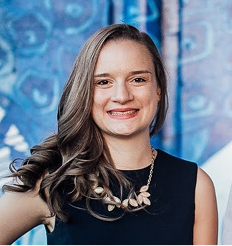
Host · CEO of Lexigate & Repspert
Julia Hensel is the host of Trial by Fire and the CEO of both Lexigate and Repspert, two companies built around helping law firms grow and thrive. She spends her days thinking about what makes a practice succeed, from the business side to the people behind it, and that work has given her a deep admiration for the women who take ownership. That admiration is what sparked this podcast. Trial by Fire is her space to sit down with women lawyers, hear their stories, and celebrate the grit, wisdom, and quiet courage it takes to build something on your own terms.
 Episode 13
Shira Katz Scanlon
 Episode 11
Patricia Rodriguez
Trial by Fire features women who built their own firms. If that's you, we'd love to talk.
Be a guest