

Trial by Fire / Episode 11
In this episode, Patricia Rodriguez shares her remarkable journey from experiencing homelessness as a child to becoming the founder and CEO of her own law firm. Patricia explains how an early desire to create change led her toward the legal profession, why she opened her own practice almost immediately after becoming licensed, and what she has learned through more than a decade of building, adapting, and growing a legal business. Patricia and Julia discuss the realities behind law firm ownership, from staying lean and managing expenses to building an online presence, hiring people who are better than you at certain tasks, and learning to delegate. Patricia also opens up about some of the most difficult periods of her career, the mental and emotional pressures attorneys face, and why mindset, resilience, and belief have become some of her most important tools as a business owner.
Julia: You had a unique childhood. What was your life like growing up, and what first sparked your interest in law?
Patricia: I grew up homeless until I was seven. My mom had addiction issues, and my father wasn't there, so it was definitely challenging.
But it also gave me a unique perspective. When you're that young, and you're seeing injustice, abuse, and poverty around you, you start asking how you can change things. I remember people telling me that if I wanted to change the world and make a difference, I had to become an attorney.
I didn't even really know what an attorney was. I just thought, "That's what I'm going to be."
From around seven years old, everything I did was connected to that goal. I had this undeniable, unwavering belief that I could change the world.
Julia: What did your path into the legal profession look like from there?
Patricia: In high school, I started mock trial and did it for three years. I also took summer criminal defense classes because I already knew what I wanted to do.
Then I went to college and competed in mock trial for another three years. I did an internship with a criminal defense firm in London in 2005 and continued getting as much legal experience as I could.
By the time I made my first appearance at Stanley Mosk Courthouse after becoming licensed, I had already been going to that courthouse for almost 15 years because I had competed there in high school mock trial.
Later, I went to Temple for law school. They recruited me for their trial team, and that experience helped shape me into the trial attorney I am today.
Julia: You opened your own practice almost immediately after becoming licensed. Why?
Patricia: I had already had so many experiences in the legal field that, as soon as I became licensed, I opened my own practice. I didn't work for somebody else or build somebody else's practice first.
About two weeks after becoming licensed, the Law Offices of Patricia Rodriguez was open.
The original branding was definitely a learning experience. My email address was incredibly long. About six months later, I rebranded, and eventually P-Rod became part of the brand. That nickname actually came from my college mock trial team.
Julia: What were those early days of running your own firm like?
Patricia: I had graduated from law school, taken the bar twice, and was financially drained and emotionally tired.
I had planned on becoming a public defender, but this was around the financial crisis, and the Los Angeles Public Defender's Office had a hiring freeze.
At the time, I was tutoring elementary students and working as an exotic dancer. Eventually, I started practicing foreclosure defense, and clients started coming to me.
For years, I didn't really advertise. I didn't have much of an online presence. I became known for foreclosure defense, and people found me from all over California.
I started the firm in my living room. I had $2,000 in my bank account and a dream in my heart.
In those early years, I was working 12-hour days, seven days a week. Over time, you learn that businesses have ebbs and flows. Sometimes you have more cases, sometimes fewer. Sometimes you have a larger staff, sometimes smaller.
My practice has gone through many iterations.
Julia: Your practice has changed significantly over the years. How did you decide when it was time to shift into new areas?
Patricia: Foreclosure defense was predominantly what I did for about 10 years. Then COVID happened, and foreclosures and evictions essentially stopped overnight.
I transitioned into family law, civil defense, and eventually personal injury.
Personal injury is now an area I really want to continue growing. The goal is to keep building that part of the firm and see how far we can take it.
Julia: Law school does not always prepare attorneys for the business side of running a firm. What have been some of your hardest lessons?
Patricia: I actually went to USC for undergrad and had a significant business background, and despite that, I still fell into the idea that bigger is always better.
Over the years, I've dealt with audits, loans, bills, and the realities of financing a business.
One thing people don't always want to talk about is debt. A lot of businesses are overleveraged.
If I could do certain things differently, I would have stayed leaner. I also would have gotten into personal injury sooner and brought in people with specialized knowledge earlier.
When I started, my focus was helping people. I wasn't necessarily thinking enough about how much debt I was taking on or how profitable each part of the practice was.
As I've gotten older, I've become much more focused on revenue, expenses, and profit margins. It isn't just about how much revenue you generate. You have to understand what you're spending to acquire and work a case and what that case ultimately produces for the business.
Julia: You mentioned lead generation and marketing. What have you learned about getting your name out there?
Patricia: It's a grind.
You have to work for people to know you and trust you.
For me, that meant creating every profile I possibly could and making sure everything was filled out and optimized. If there was an online platform that could be indexed, I wanted to be there.
But there's another side to staying lean. You should pay people who know how to do things you don't know how to do, and you should pay people who can do certain things better than you can.
My business manager is better at closing cases than I am. I have an associate who is excellent at depositions and pleadings.
There are things I'm good at, things I enjoy, and things other people are simply better at.
You have to learn that distinction.
Julia: Was learning to delegate difficult for you?
Patricia: Absolutely.
You pick the parts of the practice you're best at and enjoy most, and you delegate the rest.
You also have to learn how to trust people.
For me, coming from my childhood and all of the things I experienced, trust wasn't easy. But if you want the organization to work, you have to learn how to work with different people and trust your team.
You give your best each day, and you give yourself grace when it wasn't your best.
Julia: You've also talked about the importance of trusting experts.
Patricia: Attorneys have attorneys.
I have an ethics attorney. I have a malpractice attorney.
You need people who specialize in things you don't.
Even as an attorney, you can be too emotionally connected to your own problem to look at it objectively. Sometimes you need space, and sometimes you simply need someone whose expertise is different from yours.
Yes, you want to stay lean and keep costs under control. But you also have to pay for the things you shouldn't be doing yourself.
Julia: Have there been periods when owning a firm became especially difficult?
Patricia: Lawyers don't always like talking about the struggles.
There are real mental health challenges in this profession. There's anxiety, depression, and enormous pressure.
And then you have life outside the firm. I take care of two special adults, and I have older parents. You're still expected to keep everything going at the business while handling everything happening in your personal life.
For me, resilience has become very connected to professionalism.
The days when everything goes right are easy. The days you win, settle a case, or get a great ruling are the easy days.
The real test is the everyday grind. It's the emails. It's reading and writing. It's clients who are upset. It's opposing counsel. It's getting up the next day and doing the work again.
Julia: You also went through a particularly difficult professional period involving your foreclosure practice. How did that affect you?
Patricia: I had practiced foreclosure defense for years and was eventually charged with bar violations.
It was an incredibly difficult and depressing period because I had put my whole life into the work and genuinely believed I was helping people.
Eventually, I had to decide how I was going to respond to that experience.
For me, mindset became incredibly important.
I realized that what had gotten me through so much of my life was this undeniable, unwavering belief that I could change the world.
Since then, I've focused much more intentionally on what I want my life and my firm to look like.
There have been many difficult periods, but there have also been so many things to be grateful for.
Julia: What role does mindset play in building a business?
Patricia: It's the biggest asset.
You have to believe in yourself.
For me, that goes back to believing that you're here to change the world positively and leave people feeling better about themselves than they did before they met you.
There are always going to be setbacks. What matters is how you respond and whether you keep going.
Julia: If a woman came to you today and said she was considering opening her own law firm, what would you tell her?
Patricia: First, just do it.
Believe in yourself. Know that you're stronger than you think you are.
Starting a law practice forces you to use parts of your brain and abilities that you didn't even know you had.
On a practical level, find communities where other lawyers are willing to answer questions. Get a mentor. Find someone who already practices in the area of law and location where you want to work.
Go to bar association meetings. Meet experienced attorneys. Some may be approaching retirement and looking for younger lawyers they can mentor or send cases to.
Then write everything down.
What is your expected revenue? What are your expenses? Create a business plan.
Organization and communication are two of the most important things in my practice.
Prepare yourself, but don't let preparation become the reason you never start.
When I started, my mentor basically told me to get some business cards and start passing them out.
I knew from business school that there was obviously more to it than that, but I allowed myself to believe him.
And he was right.
Sometimes you have to start.
Try things. See what works. Be prepared to make multiple iterations. Give yourself grace, and celebrate the wins.
Celebrate the first client who retains you.
Sixteen years later, I'm still hungry, I'm still driven, and it's still fun.
Julia: And you believe strongly in writing down your goals too.
Patricia: Yes. Write down what you're thankful for.
I believe in being grateful for the thing you're working toward before you even have it.
Know what you want. Put it into words. Believe in it, and keep moving toward it.
Rodriguez Law Group, Inc.
Patricia Rodriguez is the founder and CEO of Rodriguez Law Group, Inc. in Pasadena, California, where she represents clients in personal injury, family law, and civil defense matters. Patricia knew from a young age that she wanted to become an attorney. After years of mock trial experience in high school, college, and law school, she opened her own practice shortly after becoming licensed rather than beginning her career at another firm. Over the years, Patricia has evolved her practice across multiple areas of law, changing markets and difficult business periods, and built a multi-attorney firm. Her approach to ownership is rooted in resilience, adaptability, strong communication, thoughtful delegation, and an unwavering belief in the importance of showing up for both clients and the people around her.
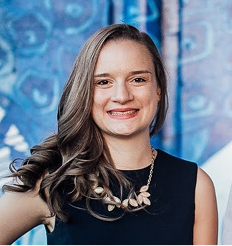
Host · CEO of Lexigate & Repspert
Julia Hensel is the host of Trial by Fire and the CEO of both Lexigate and Repspert, two companies built around helping law firms grow and thrive. She spends her days thinking about what makes a practice succeed, from the business side to the people behind it, and that work has given her a deep admiration for the women who take ownership. That admiration is what sparked this podcast. Trial by Fire is her space to sit down with women lawyers, hear their stories, and celebrate the grit, wisdom, and quiet courage it takes to build something on your own terms.
 Episode 13
Shira Katz Scanlon
 Episode 12
Megan Kiefer
Trial by Fire features women who built their own firms. If that's you, we'd love to talk.
Be a guest